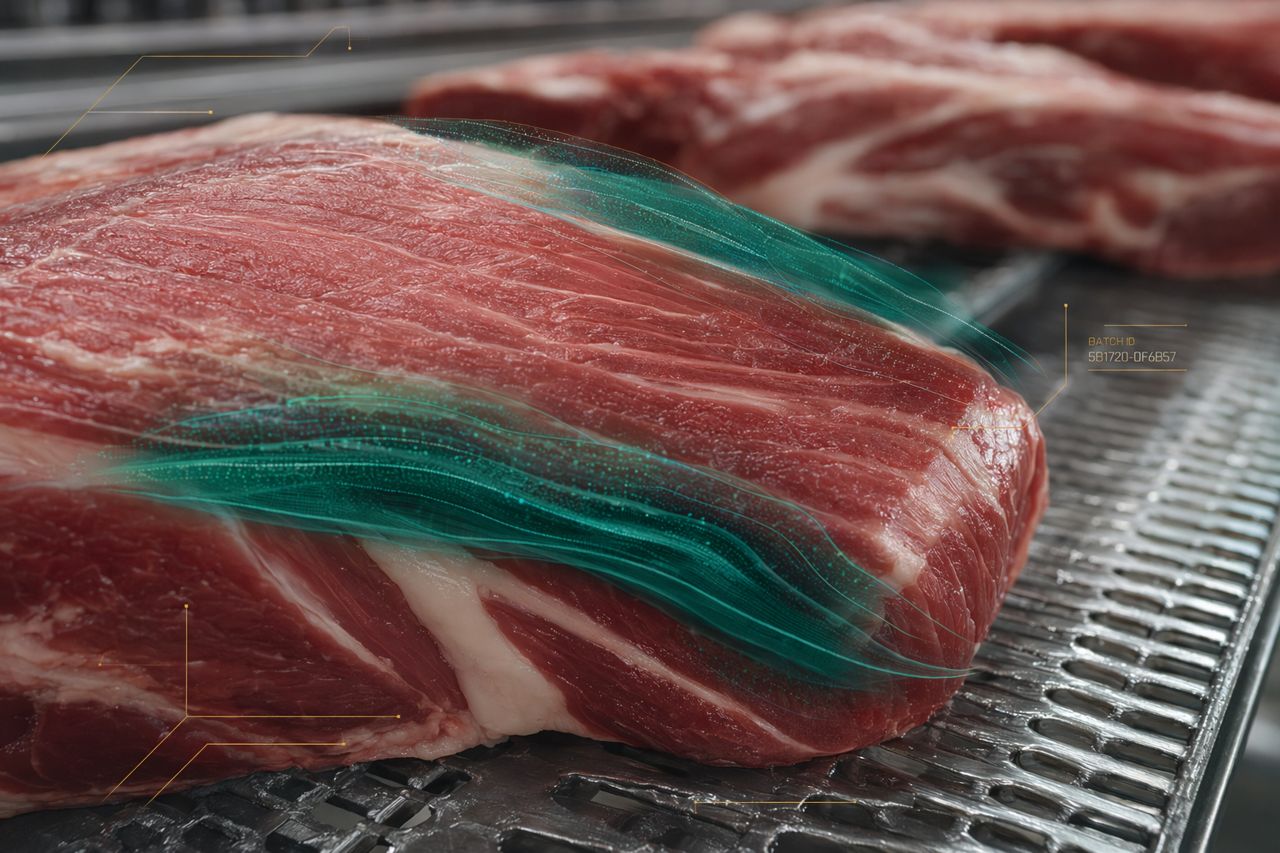
Why tenderness complaints reach QA
Tenderness complaints rarely point to one simple failure. In a halal meat plant, they usually sit at the intersection of raw material variation, cutting discipline, chilling history, marination control, cook profile, packaging, and documentation confidence.
For QA managers, the objective is not only to make the product softer. The objective is to prove why a lot behaved differently, protect halal integrity, maintain residue control, and correct the process without creating new compliance risk.
When a customer reports tough bite, inconsistent chew, dry texture, or uneven tenderness across packs, the investigation should be structured, documented, and repeatable.
Amanah Catalytics supports processors that need a halal enzyme supplier for meat processing with plant-ready technical guidance, traceable documentation, and trial plans built around measurable processing outcomes.
Common causes of tenderness variation in halal meat plants
1. Raw material variability
Muscle structure changes from animal to animal. Tenderness can be affected by:
- Animal maturity and muscle type
- Pre-processing handling stress
- Ultimate pH behavior
- Chilling rate and cold-chain stability
- Frozen storage history
- Thawing discipline before further processing
A complaint may appear at the finished-product stage, but the variation may have entered the process before marination, tumbling, injection, or cooking began.
2. Cut specification drift
Even small differences in trim, fiber direction, portion thickness, or connective tissue inclusion can change bite perception. QA should compare complaint lots against the approved cut specification, including photos, weight range, trim standard, and line checks.
For further-processed halal products, cut variation can also influence uptake, enzyme contact, cook loss, and final yield consistency.
3. Marinade, injection, or tumbling inconsistency
Tenderness performance can shift when the processing step is not uniform. Key review points include:
- Brine or marinade preparation sequence
- Ingredient dispersion and hydration
- Injection pattern or needle condition
- Tumbler loading level
- Vacuum consistency where applicable
- Contact time before cooking or packing
- Temperature control during hold steps
A lot that receives uneven contact may show mixed texture in the same shipment: some pieces acceptable, others tough, mushy, or dry.
4. Heat treatment and cook profile
Overcooking can mask tenderization performance by driving moisture loss. Undercooked or unevenly cooked product can also create texture variation and food safety concern.
QA should review cook records, equipment calibration, belt speed, load density, product spacing, and post-cook cooling. Texture complaints should be assessed together with yield, moisture, and thermal process data.
5. Freezing, tempering, and distribution abuse
Ice crystal damage, repeated freeze-thaw exposure, or poor tempering discipline can affect bite and purge. If the same product passes internal checks but fails in customer use, the distribution chain and customer handling conditions should be included in the investigation.
Where enzyme tenderization fits
Proteolytic enzymes can help halal meat processors improve tenderness consistency when they are selected, documented, and controlled correctly. The value is not simply stronger tenderization. The value is predictable tenderization within a defined process window.
A controlled enzyme program should address:
- Halal suitability and certification documentation
- Ingredient traceability by batch
- Allergen, origin, and compliance statements
- Compatibility with meat type and process conditions
- Controlled contact time before inactivation or downstream processing
- Sensory outcome: bite, juiciness, and cut appearance
- Yield behavior across normal production variation
- Residue control and label review support
For QA, the right supplier should be able to support both the technical trial and the documentation file.
A QA investigation workflow for tenderness complaints
Step 1: Capture the complaint with usable detail
Record the customer, product code, lot, production date, pack format, storage condition, preparation method, and complaint language. Ask for photos, remaining samples, and whether the issue occurred across the full shipment or only selected packs.
Complaint descriptions such as “tough,” “rubbery,” “dry,” or “uneven” should be translated into investigation hypotheses, not accepted as final conclusions.
Step 2: Isolate affected lots and compare neighboring lots
Hold retained samples where available. Compare the complaint lot with the previous and next production lots. If tenderness only changed for one lot, focus on raw material, processing interruption, ingredient preparation, or equipment condition. If several lots changed, review supplier change, specification drift, seasonal raw material variation, or a process parameter trend.
Step 3: Review halal and ingredient documentation
For any enzyme or processing aid used in meat preparation, confirm that documentation is current and aligned with site requirements. A practical QA file should include halal certification status, origin statements, allergen information, safety data, specification sheets, batch traceability, and relevant compliance declarations.
Documentation gaps can slow complaint closure even when the technical root cause is understood.
Step 4: Map the tenderness-critical control points
Build a simple line map from receiving to dispatch. Mark the points where tenderness can change:
- Raw material receiving and temperature
- Thawing or tempering
- Cutting and trim
- Marinade or brine preparation
- Enzyme addition point, if used
- Mixing, injection, or tumbling
- Hold time and temperature
- Cooking or inactivation step
- Cooling, freezing, and packing
- Distribution and customer preparation
This prevents the investigation from focusing too narrowly on one ingredient when the process itself may be driving variability.
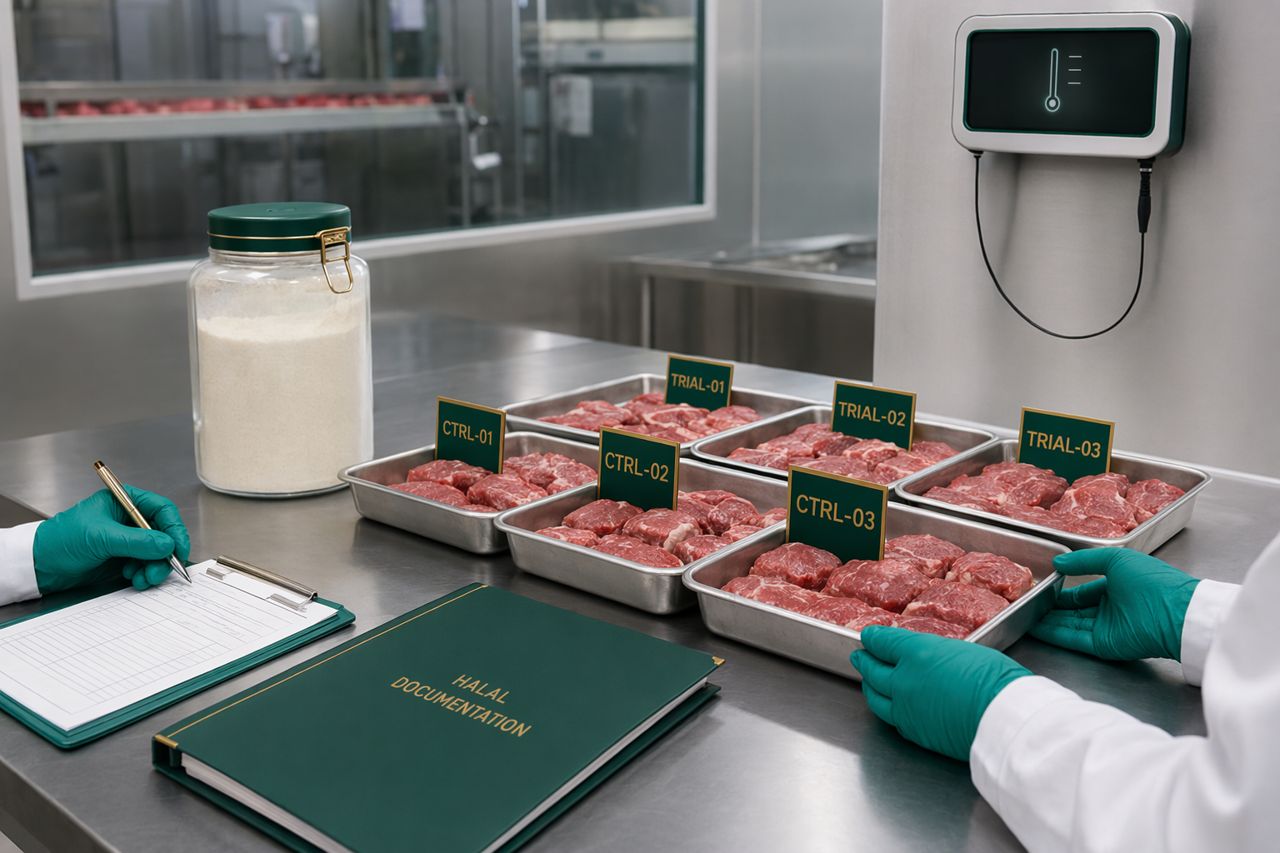
Step 5: Run a controlled plant trial before changing production
If enzyme tenderization is part of the corrective action, trial design matters. A useful plant trial should compare a current process control with one or more defined enzyme treatments under normal plant conditions.
Track practical outcomes:
- Sensory tenderness and bite consistency
- Slice or cut integrity
- Purge and cook loss
- Finished yield
- Visual appearance
- Hold-time tolerance
- Customer preparation performance
- Documentation readiness for QA approval
Avoid making a permanent formulation change until the trial shows both texture improvement and process control.
Warning signs that the enzyme program is not under control
A tenderness system should be reviewed if QA sees any of the following:
- Some packs are tender while others remain tough
- Texture becomes too soft at the surface but firm inside
- Yield changes without an approved explanation
- Operators adjust contact time informally
- Ingredient batches are not linked cleanly to finished lots
- Halal documents are expired or incomplete
- Customer complaints increase after a raw material or process change
These are not reasons to reject enzyme technology. They are reasons to tighten selection, documentation, and plant execution.
What to expect from a reliable halal enzyme supplier
A capable supplier should help QA and production teams reduce uncertainty. For halal meat processing, that means more than shipping an ingredient.
Look for support in five areas:
- Halal assurance — current documentation suitable for customer and auditor review.
- Traceability — batch-specific supply records and clear ingredient identity.
- Application guidance — practical use recommendations based on meat type, process flow, and desired texture.
- Plant trial support — a trial plan that compares outcomes under real operating conditions.
- Supply reliability — consistent availability, clear lead times, and responsive technical communication.
How Amanah Catalytics supports QA teams
Amanah Catalytics works with halal meat processors that need controlled tenderization, documentation confidence, and supplier accountability. We help teams evaluate enzyme fit, prepare trial plans, and align technical recommendations with halal and QA expectations.
Our focus is practical: stable texture, controlled process windows, clear records, and decisions that can stand up in customer or auditor conversations.
If your site is investigating tenderness complaints or reviewing a new tenderization program, use the on-site form to share your product type, process flow, target outcome, and documentation requirements.
Request a quote