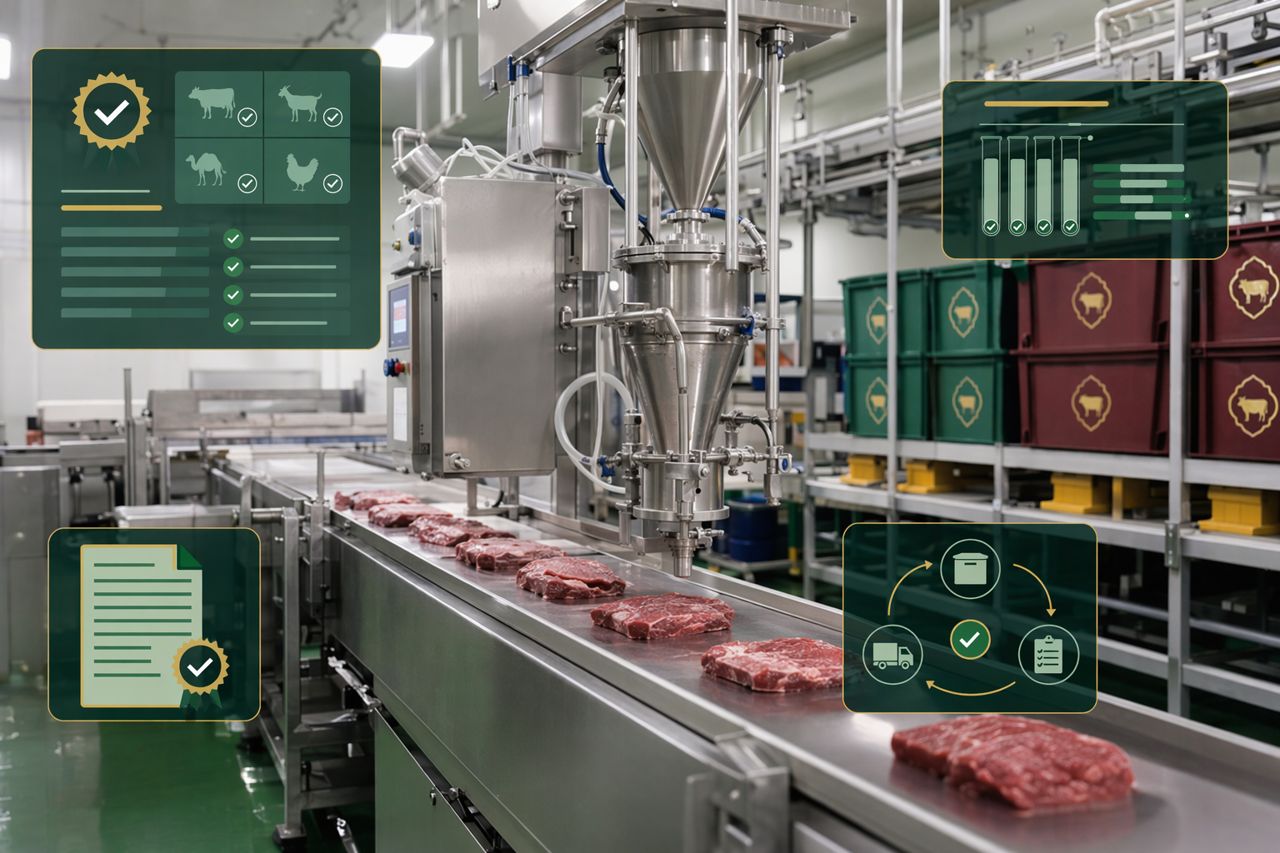
Halal Certifier Questions for Processing Aids

A QA-focused guide for halal meat processors: questions to ask certifiers before approving enzyme processing aids, with documentation, residue, and trial-readiness considerations.

Request pricing

Questions to Ask a Halal Certifier Before Approving a Processing Aid

For a halal meat processor, approving a processing aid is not only a technical decision. It is a documentation, traceability, and certification decision that can affect audit readiness, label confidence, customer trust, and production consistency.

Enzyme-based processing aids can support yield, texture management, protein functionality, and process control. But before a material enters a halal production environment, QA teams need clear answers from the halal certifier, the processing aid supplier, and internal production stakeholders.

This guide outlines practical questions to ask before approving any enzyme processing aid for halal meat operations.

Start with the certifier’s approval criteria

Different halal certifiers may evaluate processing aids with different levels of detail. Before reviewing a supplier packet, confirm how your certifier defines acceptability.

Ask:

  • Does the certifier classify this material as a processing aid, ingredient, additive, or incidental input?
  • Does the classification affect product labeling, documentation, or line clearance requirements?
  • Are enzymes reviewed based on source organism, fermentation media, carrier system, or all of the above?
  • Are non-animal, microbial, or plant-derived enzymes treated differently under the certifier’s standard?
  • Does the certifier require site-specific approval, product-family approval, or supplier-level approval?

A clear classification early in the review prevents later audit gaps.

Confirm halal suitability of the enzyme source

A halal enzyme supplier for meat processing should be able to explain the origin and suitability of the enzyme system without ambiguity. QA teams should expect traceable information, not broad marketing claims.

Ask the certifier and supplier:

  • What is the enzyme source: microbial, plant, animal, or blended?
  • If microbial, are the production organism and growth inputs acceptable under the applicable halal standard?
  • Are any animal-derived nutrients, carriers, stabilizers, or processing materials used?
  • If any animal-derived material is present, what species is involved and how is slaughter or origin verified?
  • Are alcohol, porcine-derived materials, blood-derived materials, or non-halal animal inputs excluded?

The answer should be supported by current documentation, not verbal assurance alone.

Review the full formulation, not only the active enzyme

Processing aids are often supplied as formulations. The enzyme may be halal-suitable while a carrier, diluent, preservative, anti-caking agent, or stabilizer still requires review.

Ask:

  • What are all formulation components, including carriers and processing auxiliaries?
  • Are any components concealed under generic terms that require further disclosure to the certifier?
  • Are formulation components food-grade and appropriate for meat-processing use?
  • Are any components allergen-relevant, GMO-relevant, animal-derived, or fermentation-derived?
  • Can the supplier provide a composition disclosure directly to the certifier if confidentiality is required?

For B2B approval, the goal is controlled disclosure: enough detail for halal review, confidentiality protection for the supplier, and a complete audit trail for QA.

Check certificate scope and document currency

A halal certificate is useful only when it matches the exact material being purchased and used.

Ask:

  • Does the certificate list the exact product name, code, manufacturing site, and legal manufacturer?
  • Is the certificate valid for the current production period?
  • Does it cover the final formulated processing aid, not only a raw enzyme concentrate?
  • Does it include the relevant halal standard or certifying authority recognized by your customer base?
  • Are certificate renewals tracked before expiry?
  • Is there a procedure for notifying customers of changes in formulation, manufacturing location, or certification status?

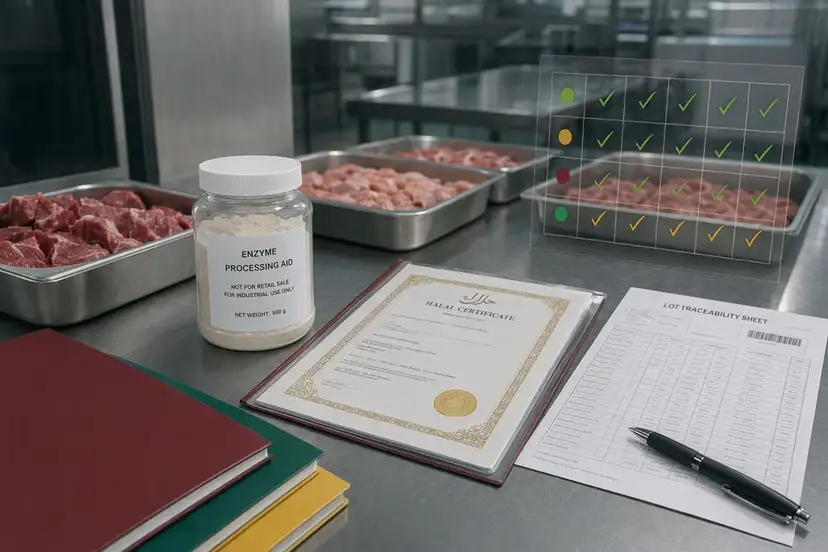
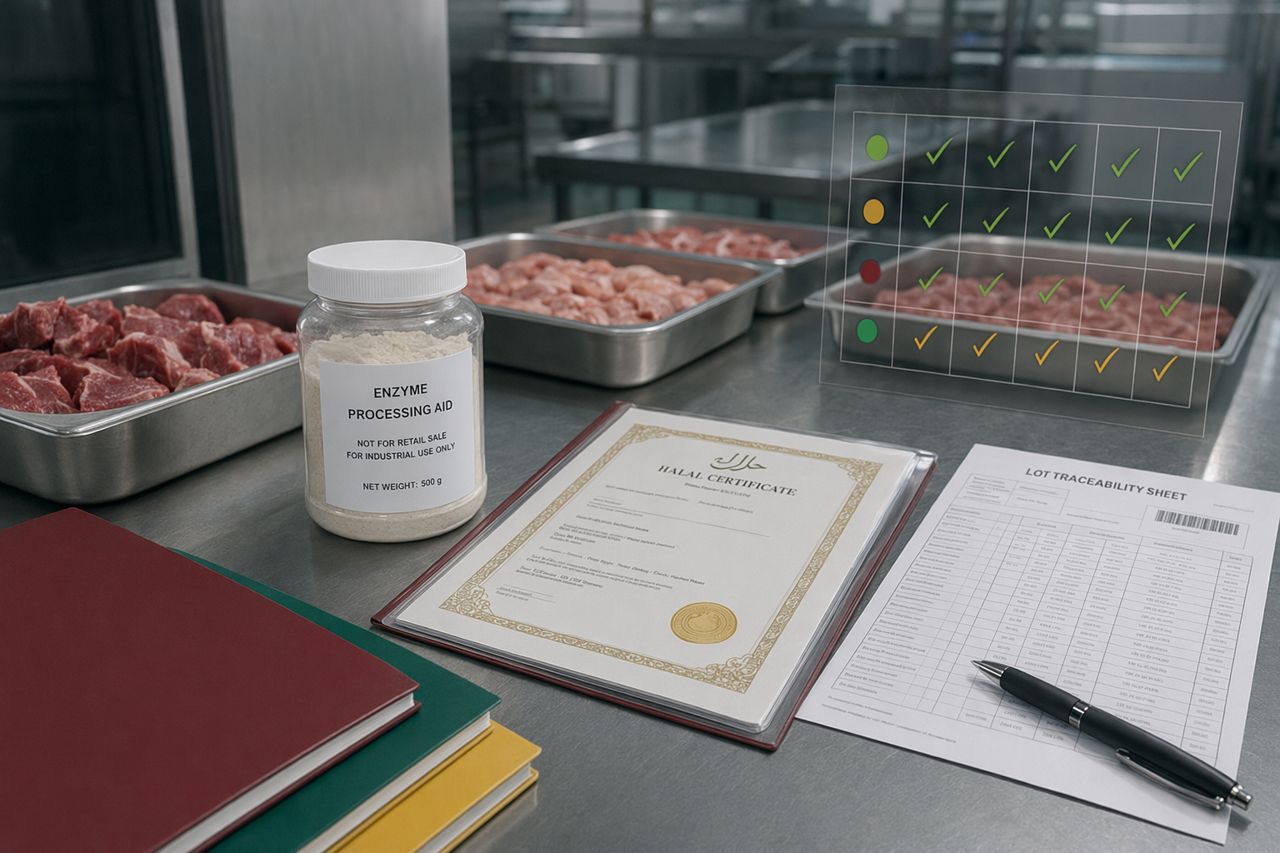
Maintain the certificate, technical data sheet, safety data sheet, allergen statement, GMO statement if applicable, country-of-origin information, and change-control commitment in one approval file.

Ask how residues are controlled

In meat processing, residue control is both a technical and compliance consideration. QA managers should understand whether the processing aid remains active, is removed, is inactivated, or becomes functionally insignificant under defined process conditions.

Ask:

  • What is the intended point of addition?
  • What processing step limits, removes, dilutes, or inactivates the processing aid?
  • Is there a recommended hold time, temperature range, pH range, or process condition for consistent performance?
  • Does the supplier provide guidance for avoiding over-treatment, texture drift, or unintended softening?
  • Are cleaning and sanitation procedures affected by use of the processing aid?
  • Does the certifier require a residue statement or processing-aid rationale?

A responsible supplier should help QA connect enzyme use to real plant controls: batch records, standard operating procedures, and verification checks.

Validate fit with your halal segregation program

The supplier’s documentation is only one part of approval. Your plant’s halal integrity depends on how the material is received, stored, dispensed, and used.

Ask internally and with the certifier:

  • Will the processing aid be stored in a halal-designated area?
  • Are containers clearly labeled with product code, lot number, halal status, and expiry date?
  • Is dispensing controlled to prevent cross-contact with non-approved materials?
  • Are utensils, hoppers, mixing tanks, brine systems, injectors, tumblers, or conveyors shared?
  • Are line clearance and sanitation records sufficient for halal audit review?
  • Who has authority to release the material for production use?

For multi-product sites, the approval should map directly to plant movement: receiving, storage, staging, dosing, processing, cleaning, and finished-product release.

Confirm supplier change-control discipline

Halal approval can be compromised by an unnoticed change. QA teams should treat supplier change control as a core purchasing requirement.

Ask:

  • Will the supplier notify you before changes to source organism, formulation, carrier, manufacturing site, country of origin, or certification status?
  • Is notification given before the change is shipped, not after inventory arrives?
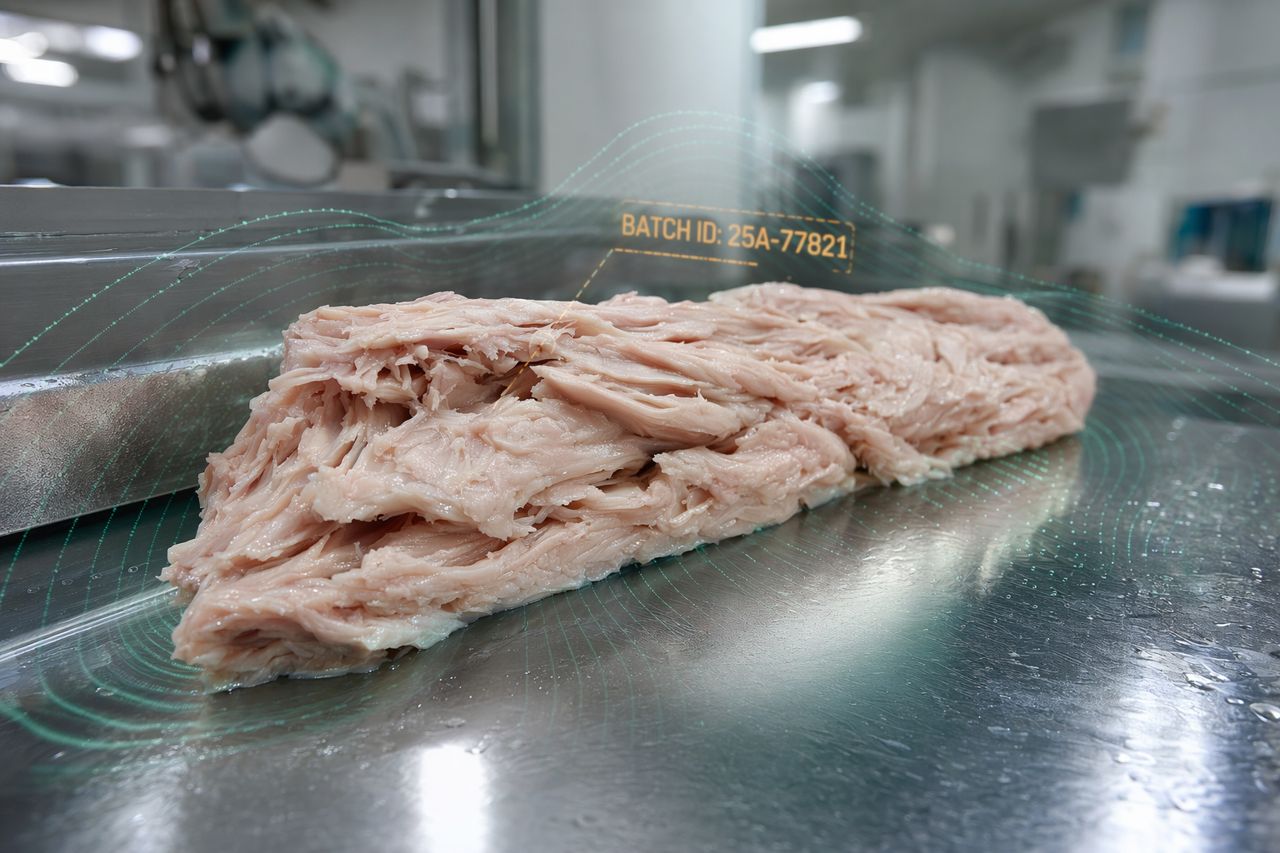
  • Are lot-level records maintained for traceability?
  • Can the supplier support recall traceability if required?
  • Is there a defined contact for technical, regulatory, and halal documentation requests?

Supplier reliability is not measured only by delivery speed. It is measured by documentation discipline and predictable communication.

Require a plant trial plan before commercial approval

Even when halal suitability is clear, performance must be proven under your plant conditions. A processing aid should be evaluated against yield, texture, sensory, purge, throughput, and consistency objectives.

Before trialing, align on:

  • Product type and target application
  • Addition point and process conditions
  • Control batch and trial batch design
  • Yield and texture evaluation method
  • Residue-control or inactivation rationale
  • QA hold-and-release requirements
  • Cleaning and line-clearance expectations
  • Documentation needed for certifier review

A controlled trial helps avoid uncontrolled adoption. It also creates evidence that QA, production, purchasing, and certification stakeholders can evaluate together.

Questions to document in your approval file

Use this checklist before final approval:

  1. Is the processing aid correctly classified by the certifier?
  2. Is the enzyme source acceptable under the relevant halal standard?
  3. Are all formulation components reviewed, including carriers and stabilizers?
  4. Does the halal certificate match the exact product, site, and supplier?
  5. Are certificate dates, scope, and recognized authority acceptable?
  6. Is there a residue-control or functional-inactivation rationale?
  7. Are plant handling, segregation, and dosing procedures defined?
  8. Is supplier change control documented?
  9. Has a plant trial confirmed technical fit?
  10. Are all documents stored in an audit-ready approval file?

What Amanah Catalytics provides for QA review

Amanah Catalytics supports halal meat processors with enzyme processing-aid programs built for controlled approval and plant use. Our role is to help QA teams evaluate suitability before scale-up and maintain confidence after implementation.

Available support may include:

  • Halal documentation packets for applicable materials
  • Technical data sheets and safety documentation
  • Source and formulation review support for certifier questions
  • Lot traceability and change-control communication
  • Plant-trial planning for yield, texture, and process consistency
  • Application guidance aligned with meat-processing conditions
  • Documentation support for internal approval files

We speak to QA, production, purchasing, and compliance teams in the same language: clear records, controlled trials, predictable supply, and measurable plant outcomes.

Approval should be evidence-based

A processing aid should not enter a halal meat operation on a claim alone. It should be supported by source transparency, certifier alignment, complete formulation review, residue-control logic, and supplier discipline.

When those elements are in place, enzyme technology can be evaluated with confidence: not as a compliance risk, but as a controlled processing tool.

Request a quote

Planning a halal processing-aid review or plant trial? Use the on-site request a quote form to share your product type, process objective, and documentation requirements. Amanah Catalytics will respond with the appropriate technical and commercial next steps.
Halal Certifier Questions for Processing AidsHalal Certifier Questions for Processing AidsHalal Certifier Questions for Processing Aids

More from Amanah Catalytics

Request pricing & specs

Tell us your application and volume — we reply with pricing and lead time.