Audit-Ready Halal Ingredient Files for Meat Processing QA
A practical guide for halal meat processor QA teams on the documents, controls, and supplier evidence to keep in an audit-ready enzyme ingredient file.
Request pricing A practical guide for halal meat processor QA teams on the documents, controls, and supplier evidence to keep in an audit-ready enzyme ingredient file.
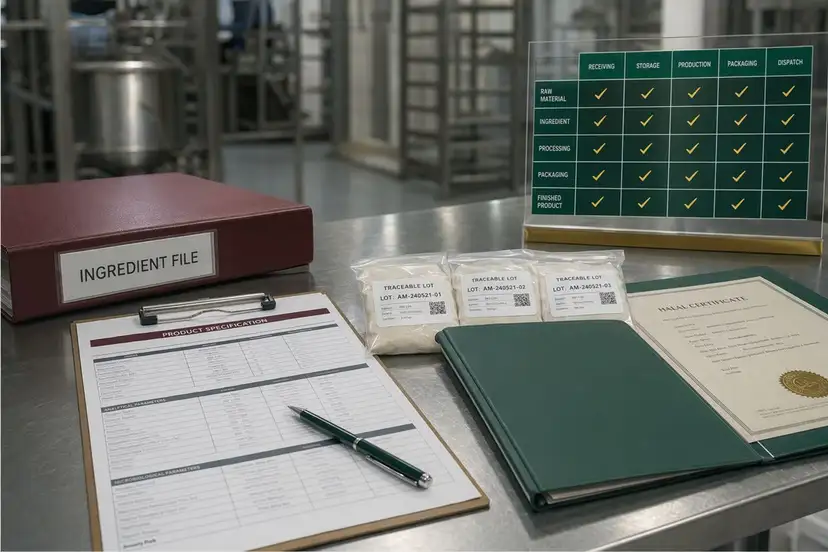
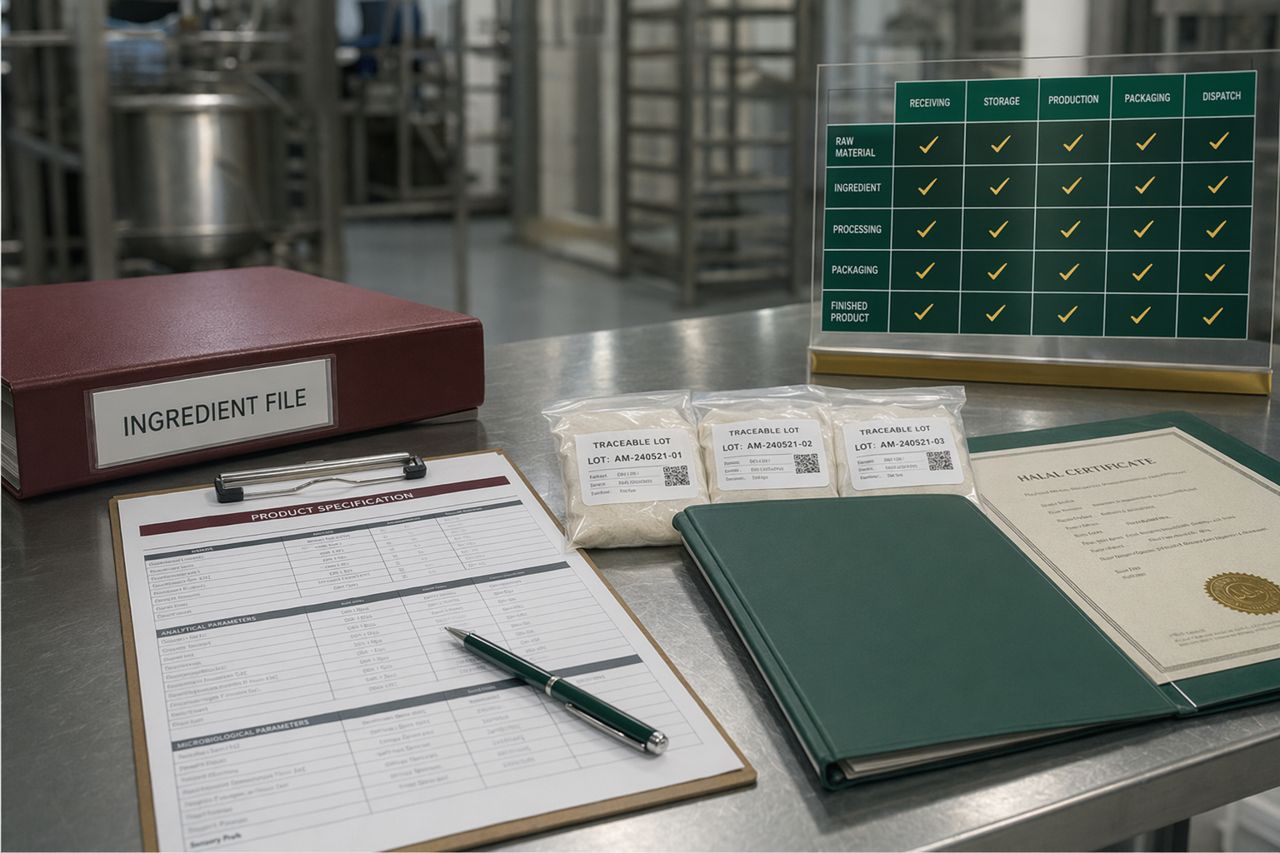
Request pricingFor a halal meat processor, an ingredient file is more than a folder of certificates. It is the evidence trail that shows an ingredient was selected, approved, received, stored, used, and reviewed under halal and food safety controls.
When enzymes are part of tenderization, protein modification, flavor development, or process improvement, QA teams need a file that can stand up to customer review, certification-body questions, and internal traceability checks. The goal is not more paperwork. The goal is faster answers with fewer production interruptions.
Amanah Catalytics works as a halal enzyme supplier for meat processing teams that need documentation readiness, controlled plant trials, and reliable technical support before commercial adoption.
An audit-ready file should answer four questions clearly:
For enzymes, this matters because the processing aid may be used at low inclusion levels, may not be visible in the final product narrative, and may require careful explanation to non-technical reviewers. A well-built file prevents uncertainty.
Keep the current certificate from the relevant halal authority or a formal halal suitability statement supported by the supplier. QA should verify:
If the enzyme is supplied under a private product code, the file should connect that code to the certified or reviewed material without ambiguity.
The specification sheet should identify the material in practical production terms. It should include appearance, intended use, carrier or diluent information where applicable, storage conditions, shelf life, and packaging format.
For meat processors, the specification should also support process fit: whether the enzyme is intended for marinade systems, injection brines, tumble applications, comminuted meat, collagen-rich substrates, or controlled protein modification.
Halal review often depends on the full ingredient system, not only the enzyme source. QA should keep a declaration that covers:
A short answer is rarely enough. The stronger file shows that the supplier understands halal scrutiny and can support the material with clear declarations.
Even when halal is the primary review, customer portals often request a broader compliance packet. Keep current statements for allergens, genetically modified material status, vegan or vegetarian suitability where relevant, and other dietary claims only when supported.
Avoid unsupported marketing language. Auditors prefer restrained, document-backed statements.
The ingredient file should include the supplier’s food safety certification or quality system evidence where available. Examples include recognized food safety management certification, HACCP-based controls, or documented quality management procedures.
The purpose is to show that the enzyme supplier is not only halal-aware, but also capable of repeatable, controlled manufacture.
Enzyme ingredients require sensible handling controls. Keep the safety data sheet, handling guidance, storage instructions, and internal receiving notes together. QA and EHS teams should align on respiratory, dust, spill, and hygiene controls where applicable.
For liquid systems, include container handling, closed-transfer expectations where used, and cleaning considerations after dosing or blending.
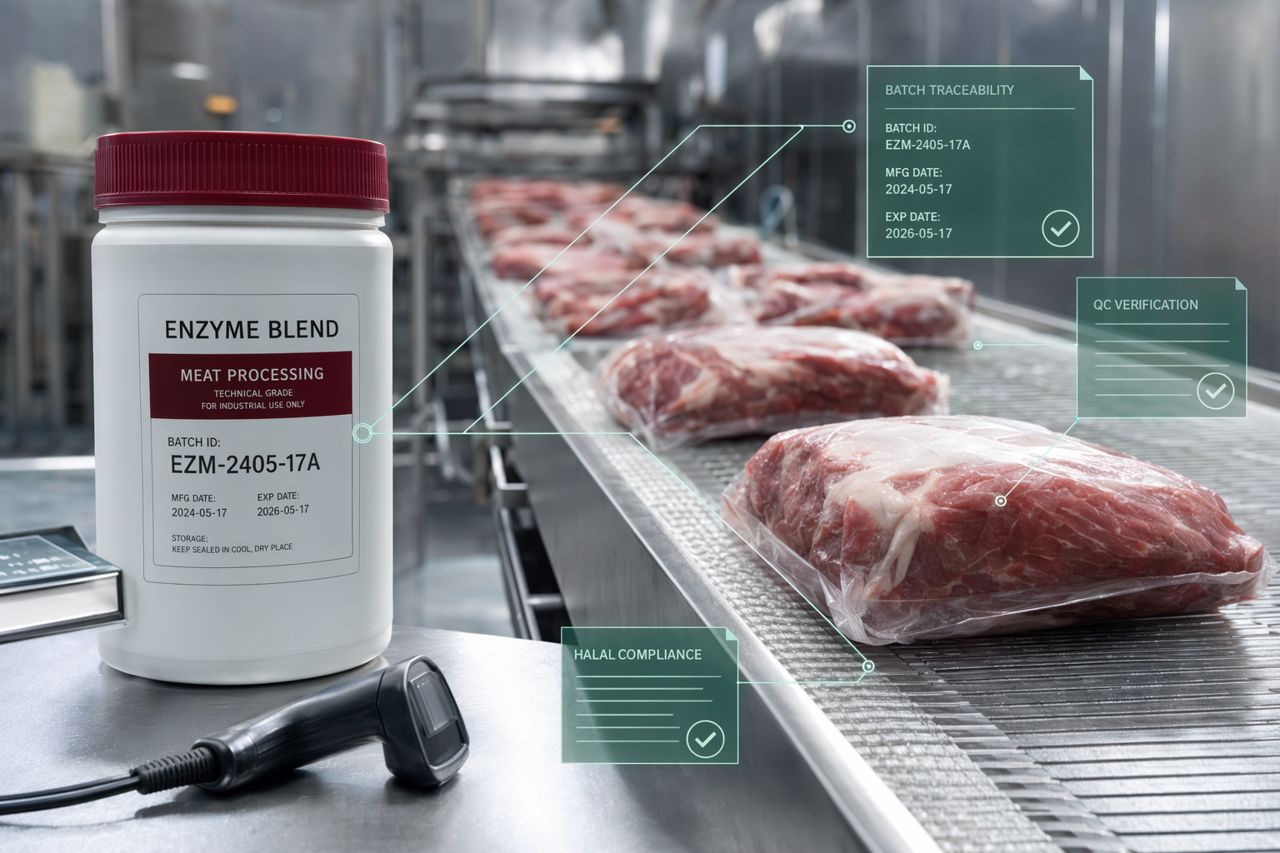
For each incoming lot, keep a release document or certificate of analysis that matches the received lot number. The lot record should connect to:
Traceability is strongest when the lot can be followed forward into production and backward to the supplier without manual reconstruction.
Document why the supplier was approved. This can include questionnaire review, certificate review, technical capability, change-notification commitments, complaint response history, and trial support.
For QA managers, the approval record is often the difference between a file that looks complete and a file that proves controlled sourcing.
Enzyme systems can be affected by changes in manufacturing site, formulation support ingredients, carrier system, packaging, or halal certification scope. The supplier should provide a practical change-notification commitment so your plant is not surprised after commercial use begins.
Keep the agreement or supplier statement in the file, and define who in QA receives change notices.
A controlled trial record helps QA defend the material’s use. The trial summary should capture:
The trial does not need to read like a research paper. It should show that the ingredient was evaluated under real plant conditions.
For enzymes used as processing aids or functional ingredients, the file should explain how the plant controls use and prevents unintended carryover. The rationale may include validated process steps, formulation control, cleaning procedures, line clearance, or heat-processing conditions where relevant.
Use plain language. The best audit files make the control logic easy to follow.
QA teams often discover the same weaknesses during customer reviews:
These gaps can be corrected before the next audit window. The best time to repair the file is before the ingredient is scaled across multiple lines.
Use a structure that mirrors audit questions:
This structure helps QA retrieve answers quickly when a certifier, customer, or internal auditor asks for evidence.
Before adding an enzyme to your halal meat process, ask the supplier:
A reliable supplier should answer clearly and provide documents without pushing the burden back onto QA.
Amanah Catalytics supports halal meat processors with documentation packages, technical review, and plant-trial planning for enzyme solutions used in meat processing environments. Our approach is built for QA teams that need controlled sourcing, consistent performance, and supplier communication that holds up under review.
We help align the ingredient file with the way your plant actually runs: receiving, storage, formulation, use, traceability, and audit response.
If your QA team is evaluating an enzyme for a halal meat process, send the process context and documentation requirements through the on-site request form. We will help identify the right enzyme option, the supporting file components, and the next practical trial step.
Request a quote through the on-site form to begin a documented review with Amanah Catalytics.

Tell us your application and volume — we reply with pricing and lead time.