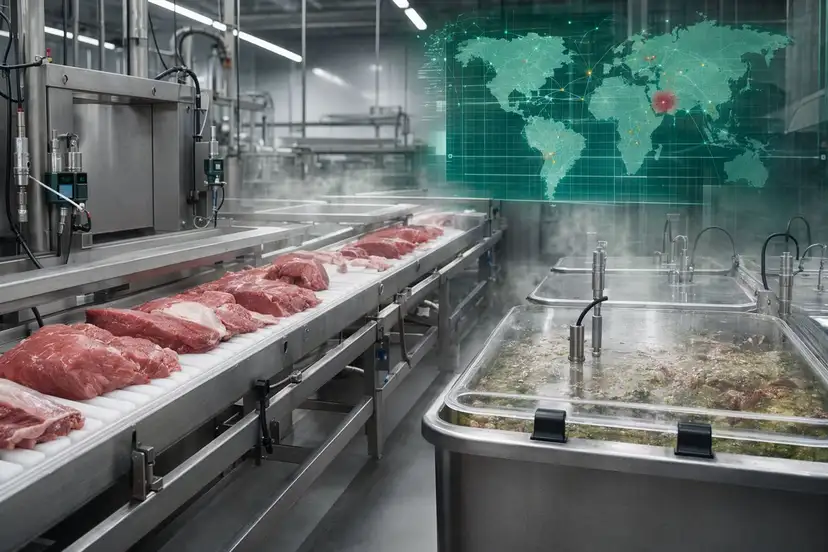
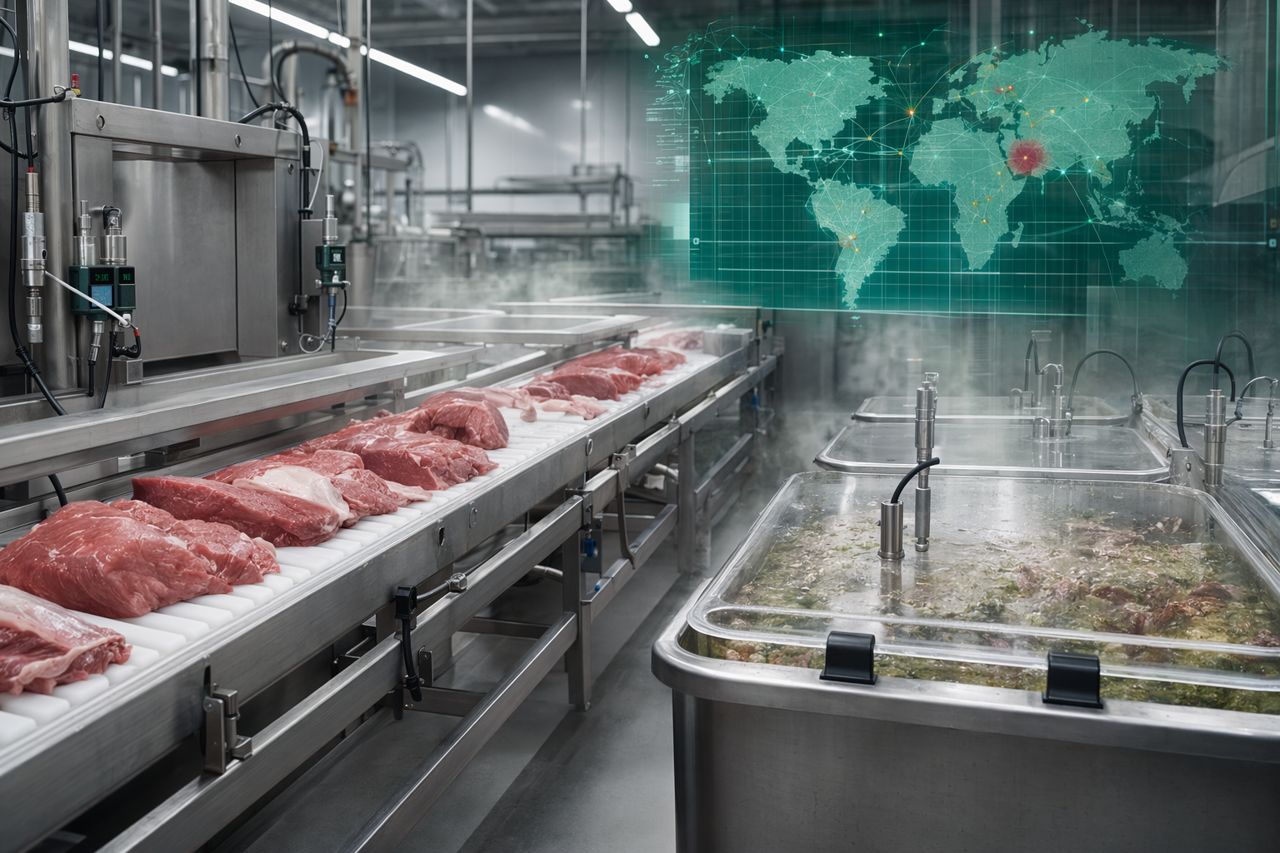
Cold Chain Risk in Value-Added Halal Meat Processing
Map cold chain risk points in value-added halal meat and learn how documentation-ready enzyme systems support yield, residue control, and QA plant trials.
Request pricing Map cold chain risk points in value-added halal meat and learn how documentation-ready enzyme systems support yield, residue control, and QA plant trials.
Request pricingValue-added halal meat production creates a different risk profile from primary cutting. Marinades, injected brines, formed products, sliced cooked meats, tenderized cuts, and ready-to-cook portions all add handling steps, contact surfaces, hold times, and formulation variables.
For quality assurance managers, the question is not only whether the line can stay cold. The question is whether every added step remains documented, halal-suitable, repeatable, and controlled under real plant conditions.
Amanah Catalytics works with halal meat processors that need enzyme solutions aligned with cold chain discipline, residue control, yield consistency, and audit-ready documentation. If you are evaluating a halal enzyme supplier for meat processing, cold chain mapping should be part of the sourcing conversation from the first technical review.
A basic chilled carcass or primal flow has fewer interventions. Value-added production can include:
Each step can increase surface exposure, dwell time, temperature variability, and batch complexity. In halal plants, the same controls must also preserve segregation, approved material status, supplier traceability, and documentation integrity.
Risk begins before formulation. Raw material temperature, packaging condition, supplier lot identity, and intake timing affect downstream consistency. If an enzyme system is used later in the process, raw material variation can influence tenderness development, purge, cook yield, and slice performance.
Quality teams should confirm:
Tempering is often a hidden variability point. Product that is too cold may resist injection or mixing. Product that is too warm can shorten safe handling windows and change process response.
For enzyme-assisted applications, tempering must be evaluated against the intended process window. The goal is controlled functionality, not uncontrolled tenderization or texture drift during staging.
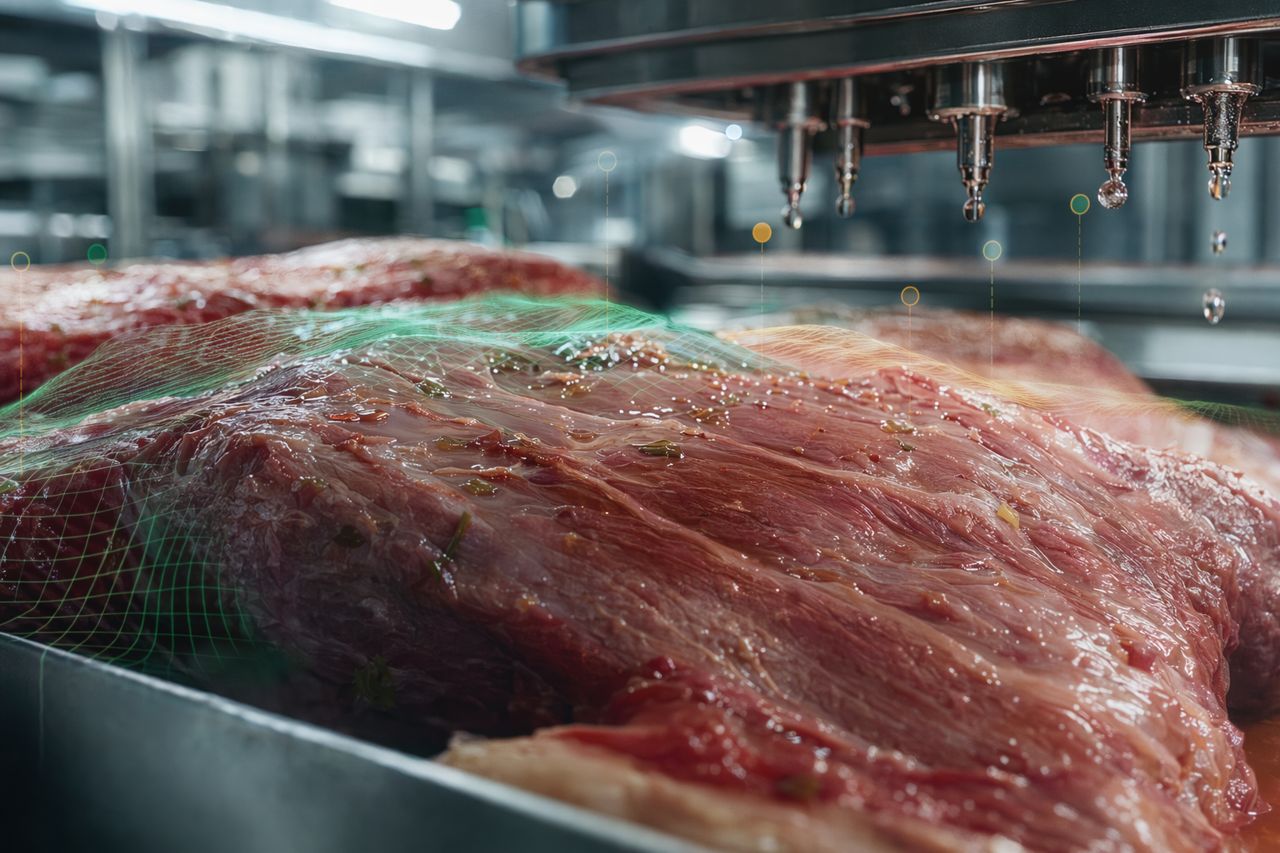
Brines and marinades introduce both opportunity and risk. They can improve yield, eating quality, seasoning distribution, and product differentiation. They also create a route for temperature gain, cross-contact, and formulation error.
Cold chain controls should include:
If enzymes are included in a brine or marinade strategy, the supplier should provide a clear recommendation for storage, addition sequence, process timing, and downstream inactivation or control strategy where relevant.
Tumblers can become a major dwell-time point. Even when jacketed or located in chilled rooms, batch duration, load size, vacuum cycles, and drum temperature can shift performance.
For QA, the focus is repeatability:
Formed meat, portioned kebab-style formats, burger systems, coated items, and ready-to-cook products often involve rework or trim incorporation. Rework must be treated as a controlled material stream, not an informal recovery loop.
Cold chain risk increases when rework identity, time out of refrigeration, and halal status are not fully visible. Enzyme systems used for binding, texture optimization, or yield support must be assessed within that rework policy.
Cooked value-added halal meat requires disciplined transition from heat treatment to chilled stability. Slow chilling can compromise shelf life and purge control. Over-processing can reduce yield and change texture.
Where enzymes are used upstream, the cook step may also serve as a functional endpoint. Your supplier should understand the actual line conditions, not only the target recipe. Amanah Catalytics supports trials that connect upstream enzyme selection to downstream cook yield, bite, sliceability, and residue control.
Post-cook slicing exposes product again. Packing room temperature, slicer hygiene, pack dwell time, and dispatch staging all influence finished-product quality.
Key controls include:
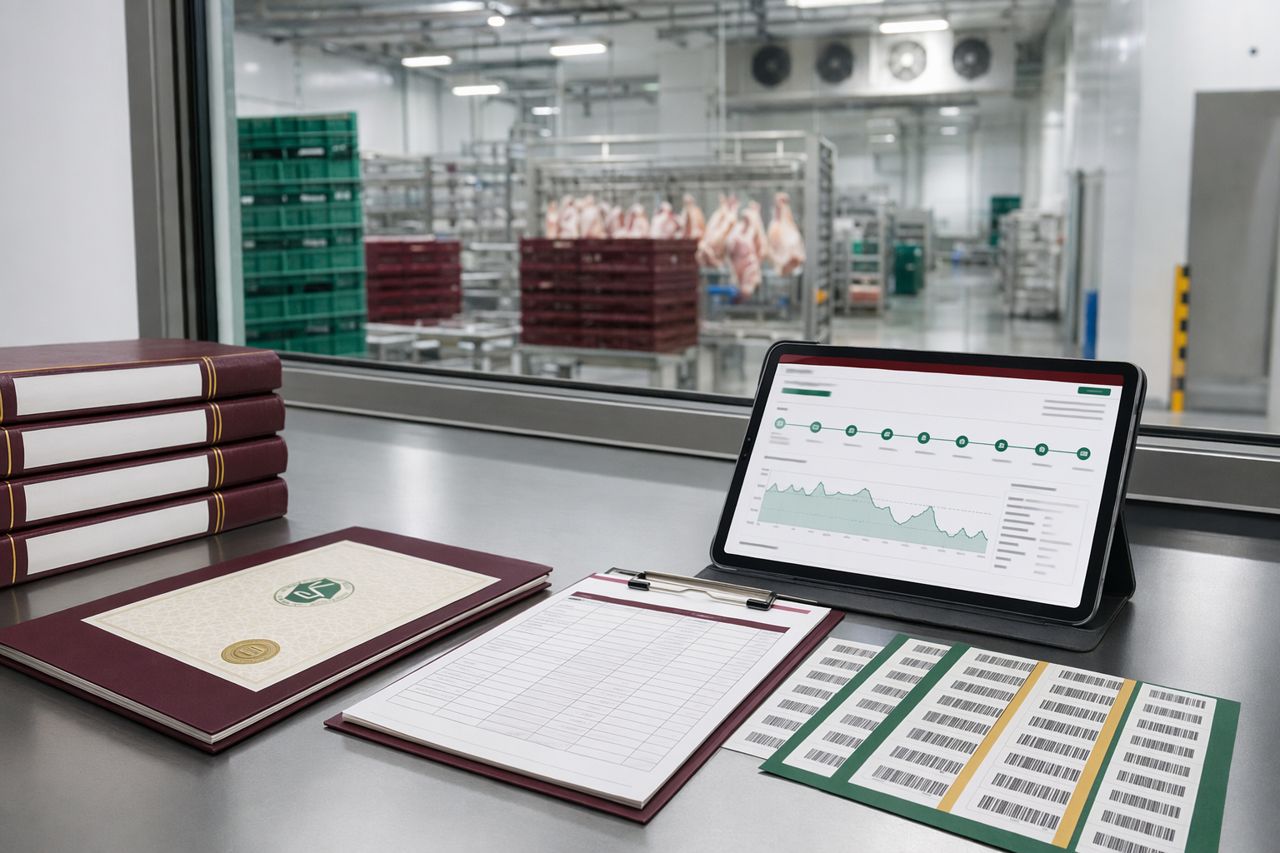
An enzyme solution is not just a processing aid or functional ingredient. In a halal meat plant, it is also a controlled supply item with documentation, storage, handling, and audit implications.
A reliable halal enzyme supplier for meat processing should support:
Amanah Catalytics keeps the technical conversation focused on plant outcomes: yield consistency, controlled tenderness, purge reduction, slice performance, process stability, and documentation readiness.
Before approving an enzyme system, QA and operations should agree on a measured plant trial. The trial does not need to be complicated, but it must be disciplined.
Recommended checkpoints include:
The best trial design captures normal production variation instead of ideal laboratory conditions. That is where supplier reliability becomes visible.
Use these questions during technical sourcing:
If these answers are incomplete, the buying risk is not only technical. It becomes an audit, consistency, and customer-confidence risk.
Amanah Catalytics supplies enzyme solutions with a compliance-minded approach for halal meat processing environments. Our role is to help your team connect ingredient selection with real production controls.
We support processors with:
If you are reviewing cold chain risk in a value-added halal meat line, Amanah Catalytics can help you evaluate enzyme options before plant approval.
Use the request a quote form and include your product type, process steps, target improvement, halal documentation requirements, and expected trial timeline. Our team will respond with a practical technical path for evaluation.
Tell us your application and volume — we reply with pricing and lead time.